What Is TarotGuide?
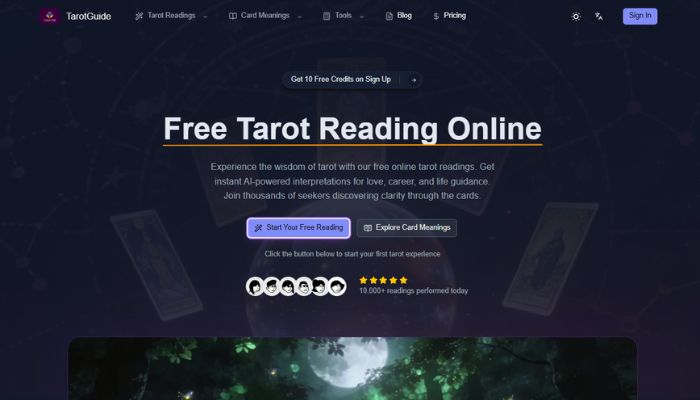
TarotGuide is a free online tarot reading platform that blends centuries-old tarot card tradition with modern artificial intelligence. Instead of booking a human reader or shuffling a physical deck, you simply visit the site, type your question, pick a spread, and receive a personalized interpretation almost instantly. It’s designed for everyone from complete beginners who have never touched a tarot deck to experienced seekers looking for a quick, always-available source of reflection and guidance.
What makes TarotGuide worth exploring in 2026 is the way it has moved tarot from an expensive, appointment-based experience into something genuinely accessible. The platform reports over 10,000 readings performed daily, which suggests a growing community of people finding real value in the tool.
At its core, the platform is built around an AI engine that doesn’t just spit out static card definitions. It connects the cards you draw into a coherent narrative that speaks to your specific question, making readings feel more personal than the generic card-meaning lookups you’d find on a basic reference site.
Key Features of TarotGuide
AI-Powered Personalized Interpretations are the backbone of what TarotGuide does differently from a standard card encyclopedia. When you submit a question and draw cards, the AI doesn’t just describe what the Three of Swords means in isolation. It weaves the cards together into a reading that responds to your actual situation, which creates that feeling of a genuine session rather than a database lookup.
A Complete 78-Card Library gives users access to detailed meanings for every card in a traditional tarot deck, including all 22 Major Arcana and all 56 Minor Arcana cards. Each entry covers both upright and reversed interpretations, along with symbolism explanations. This is incredibly useful if you’re studying tarot seriously and want to understand the nuance behind each card beyond a one-liner definition.
Over 12 Spread Types means you’re never stuck with a one-size-fits-all layout. You can pull a single card for a quick morning check-in, run a Three Card Spread for a past-present-future look at a situation, go deep with the Celtic Cross when you’re navigating something complex, or use targeted spreads like the Love Reading, Career Reading, or Soulmate Reading when life throws a specific challenge at you.
The Duo Reading Feature, available on the Pro plan, lets you select two different AI tarot readers for the same spread. This is a genuinely creative touch. Different readers can bring different stylistic interpretations to the same cards, which helps you see a question from more than one perspective and decide which framing resonates most with your situation.
Follow-Up Questions allow you to dig deeper into a reading rather than accepting the first interpretation and moving on. Lite subscribers get one follow-up per reading, Pro members get three, and Max subscribers can ask unlimited follow-ups. This feature transforms TarotGuide from a simple reading tool into something closer to an interactive consultation.
The Birth Card Calculator and Report is one of the more unique features on the platform. Your birth card is derived from your date of birth and is said to represent core personality themes in the tarot tradition. TarotGuide generates a full report around this concept, which many users find useful as a starting framework for deeper self-exploration.
Daily Tarot and One Card Readings are completely free forever, no credits required. This means anyone can build a consistent daily tarot practice without ever spending a cent. It’s a genuinely generous free tier in a space where many platforms put even basic readings behind a paywall.
Privacy and Security are treated as a core feature rather than an afterthought. The platform keeps your questions and results confidential, which matters a lot when people are asking deeply personal questions about relationships, health decisions, or career fears.
Advantages of Using TarotGuide
The most obvious advantage is the sheer accessibility of the platform. Traditional in-person or phone tarot readings can cost anywhere from $50 to $200 per session, and you often have to book days in advance. TarotGuide removes both barriers. You get a reading in under a minute, at any hour, for free or at a very low monthly cost. For someone who wants to make tarot a regular reflective practice rather than an occasional splurge, that accessibility is genuinely game-changing.
The AI consistency is another real benefit that doesn’t get talked about enough. A human reader, even a skilled one, can have an off day. They might be tired, emotionally preoccupied, or unconsciously projecting their own mood into your reading. The AI doesn’t have that problem. Every reading gets the same quality of attention, whether it’s 3 PM on a Tuesday or 2 AM on a Sunday. For people who use tarot as a journaling or self-reflection tool, that reliability matters.
The learning curve is also remarkably gentle. The platform’s beginner-friendly design means you don’t need to memorize 78 card meanings before your first reading makes sense. The interpretations explain themselves as you go, so newer users naturally absorb the symbolism of the tarot system over time just by using the tool regularly.
Who Should Use TarotGuide?
TarotGuide works beautifully for people who are curious about tarot but feel intimidated by the learning curve of a physical deck. If you’ve always wanted to explore the symbolism and intuitive framework that tarot offers but didn’t know where to start, this platform guides you through the process without making you feel lost.
It’s also an excellent fit for existing tarot practitioners who want a low-friction daily practice tool. Rather than setting up a physical spread every morning, you can pull a single card, get a thoughtful AI interpretation, and use that as a journaling prompt or meditation anchor for the day.
Content creators, wellness coaches, and spiritual practitioners in 2026 are also finding platforms like TarotGuide useful as research and inspiration tools. If you create content around mindfulness, personal development, or intentional living, exploring AI-interpreted spreads can spark ideas and give you authentic language to work with.
People navigating major life transitions, such as career pivots, relationship questions, or big personal decisions, are arguably the most consistent users of platforms like this one. TarotGuide won’t make the decision for you, but it can serve as a structured framework for reflection when you feel stuck or overwhelmed.
Pricing of TarotGuide in 2026
TarotGuide runs on a credit-based subscription model with four clear tiers. The Free plan costs nothing and gives you 10 credits at signup (valid for seven days), plus permanent access to Daily Tarot and One Card readings. It also includes a basic card meanings library and seven days of reading history, which is genuinely useful for testing whether the platform fits your needs.
- The Lite plan at $9.90 per month gives you 60 credits monthly, access to all 12-plus spread types, one follow-up question per reading, and unlimited reading history. This tier is well-suited for light users who want occasional deeper readings beyond the daily free card.
- The Pro plan at $19.90 per month is the most popular option and includes 150 monthly credits, premium AI interpretations, the Duo Reading feature, and up to three follow-up questions per reading. For regular seekers who want the full experience, this is the most balanced value tier.
- The Max plan at $29.90 per month offers 300 credits, unlimited follow-up questions, priority support, and early access to new features. It’s the right choice for power users who run multiple daily sessions or professionals who use the platform heavily. Pricing is subject to change. Visit the official website for current rates.
Real-World Use Cases
Consider someone like a freelance career coach who uses TarotGuide as a supplementary reflective tool with clients who are open to holistic approaches. Before a coaching session, they might run a Career Reading spread on a client’s stated challenge and use the interpretation as a conversation starter. The AI’s framing of the cards often surfaces themes the client then confirms or expands on, making the session feel more focused and intuitive.
A university student preparing for a high-stakes semester might use the daily card pull every morning as a mindfulness anchor. They’re not making academic decisions based on the cards, but the act of pausing, reading an interpretation, and reflecting for two minutes before opening their laptop sets a focused, intentional tone for the day.
A content creator running a wellness YouTube channel might use the Birth Card Report feature to create audience engagement content, inviting viewers to calculate their own birth cards and share interpretations in the comments. It’s a creative, low-effort community-building strategy that feels authentic within the mindfulness content space.
Couples working through communication challenges have also reported using relationship-focused spreads like the Love Reading and Soulmate Reading as neutral conversation starters. When talking directly about feelings is difficult, having a third-party framework, even a symbolic one, can ease the opening of those conversations.
Integrations and Compatibility
TarotGuide is entirely web-based, which means it works on any modern browser across desktop, tablet, and mobile without requiring an app download. In terms of direct integrations with CRMs, scheduling tools, or social platforms, the platform keeps things simple. There’s no API or Zapier connection, which is fine given its nature as a personal guidance tool rather than a business workflow app.
For content creators and digital entrepreneurs exploring AI tools in 2026, TarotGuide fits naturally alongside platforms listed in AI tool directories like IndevAI’s wellness and personal development category, where users discover niche AI applications beyond productivity and marketing.
Why TarotGuide Stands Out in 2026
Most AI tarot tools available today fall into one of two camps. They either offer a static card database with no real personalization, or they’re expensive subscription apps that gate most features behind aggressive paywalls. TarotGuide sits comfortably between these extremes. The free tier is genuinely functional, not a stripped-down preview, and the paid plans are priced in a range that most individual users can afford without hesitation.
The Duo Reading feature is something you won’t find on many comparable platforms, and it reflects a thoughtful design philosophy. Rather than presenting one interpretation as the definitive reading, TarotGuide acknowledges that tarot is an interpretive art and gives users the option to explore multiple perspectives. That’s a small but meaningful nod to the nuance of the tradition.
The platform also benefits from being focused. It doesn’t try to be a meditation app, an astrology platform, and a numerology tool all in one. TarotGuide does tarot, and it does it well, which makes the user experience feel clean and purposeful rather than bloated.
How to Get Started with TarotGuide
Getting started takes less than five minutes. You go to tarotguide.net, click the sign-up button, and create a free account using your email address. You’ll receive your 10 welcome credits automatically, and there’s no credit card required at this stage.
Once you’re inside, start with a simple One Card Reading or a Three Card Spread before exploring more complex layouts. Type your question clearly and specifically, because the more focused your question, the more relevant the AI’s interpretation tends to feel. Think of it the same way you’d frame a Google search: the more precise the input, the more useful the output.
After your first few sessions, explore the card library to understand the symbolism behind the cards you’ve been drawing. Over time, you’ll start recognizing the cards and their themes, which makes each new reading feel richer and more meaningful. If you decide the platform fits your practice, the Pro plan at $19.90 per month gives you everything you need for a consistent, high-quality tarot experience.
Conclusion
TarotGuide is a well-built, genuinely accessible AI tarot platform that makes daily tarot practice affordable and approachable in 2026. It’s ideal for curious beginners, everyday mindfulness practitioners, wellness content creators, and anyone who wants a structured reflective framework without the cost or logistics of a human reader. It’s not a replacement for deep personal guidance or professional support, but as a self-exploration tool it’s one of the most thoughtfully designed options in this space.
If you’re ready to give it a try, head over to the official TarotGuide website and start with the free plan. You might be surprised how useful a two-minute card pull can be before a big decision.